She taught me to go to school
And get my education
But remember
There’s a bias to them books
That they been making.
Lecrae – “Come and Get Me”
If this ain’t living then they lied well
…
I don’t know another way to go
This is the only way they ever showed
Lecrae – “Just Like You” Ft J Paul
And we all need grace
In the face of each other.
All the pieces on the ground are shattered,
All the dreams I thought I’d found,
Can you put me back together?
I need your grace for my thoughts.
God I’m broken in this mess I made,
I need you to restore me.
Lecrae Ft Kari Jobe – “Broken”
Here, in the life of the father of our nation [George Washington], we can see the developing dilemma of white America: the haunting ambivalence, the intellectual and moral recognition that slavery is wrong, but the emotional tie to the system so deep and pervasive that it imposes an inflexible unwillingness to root it out.
…
Yet in his heart [Thomas] Jefferson knew that slavery was wrong and that it degraded the white man’s mind and soul. In the same Notes on Virginia he wrote: “… Indeed I tremble for my country when I reflect that God is just, that his justice cannot sleep forever… the Almighty has no attribute which can take sides with us in such a contest.”
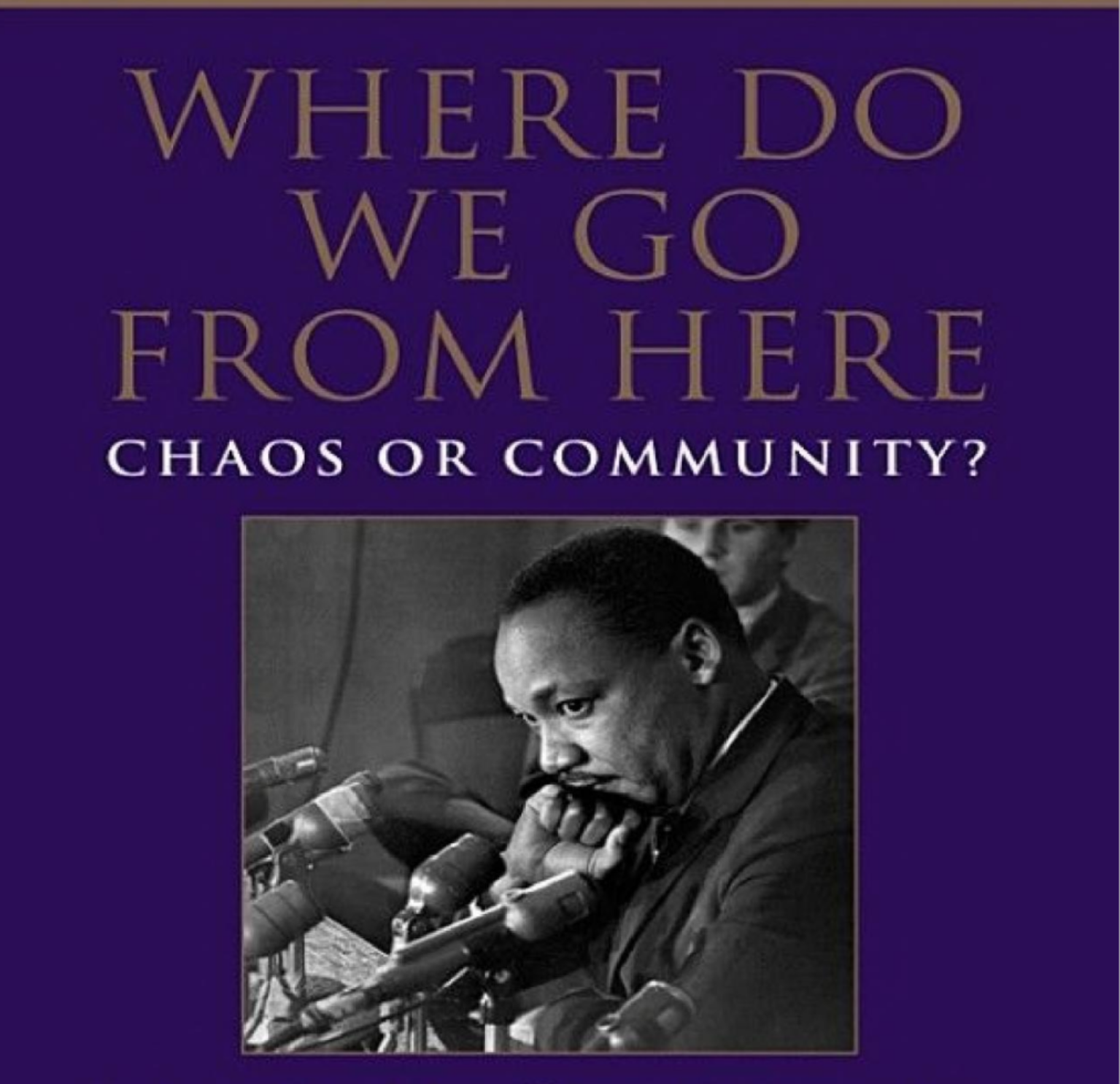
Martin Luther King, Jr. – Where Do We Go From Here: Chaos Or Community? (pgs. 80 – 81)
Last week marked the remembrances of Juneteenth, the burning of the Greenwood District in Tulsa, and a white supremacist taking nine black lives in Mother Emmanuel AME church five years ago.
Last week again marked remembrances of the value of black lives. In 2020, voices around the globe have declared that Black Lives Matter. This year has been one that has made history.
It has also called people to take a more thorough look at history, and go beyond the dominant narrative.
For some, Juneteenth and Greenwood are recent discoveries. There are glaring disparities in the stories of America’s past that are considered worthy to be taught as history.
And like so many disparities that have been brought glaringly into the public spotlight they often seem to be drawn along the line of race.
In her Time’s article “This Is Where the Word ‘History’ Comes From” (June 2017), Katy Steinmetz writes “we have come to expect more from history — that it be free from the flaws of viewpoint and selective memory that stories so often contain. Yet it isn’t, humans being the imperfect and hierarchical creatures that they are and history being something that is made rather than handed down from some omniscient scribe.”
For so long, specific voices dominated (monopolized) institutionalized history telling. What has been recorded in textbooks and taught in schools has come through biased, selective lenses. Omissions have been made. But admissions of those omissions have not.
In the specific context of the United States of America, that power to control the cultural historical narrative has come from, and been used to further white supremacist ideology. It is one of the outworkings of white privilege.
One might call that privilege, White Blessing.
A few days ago Lecrae joined Lou Giglio (pastor of Passion City Church in Atlanta) and Dan Cathy (CEO of Chick-fil-A) to talk about race in America and “The Beloved Community”.
The entire conversation is certainly worth a listen. I’m going to zero in on one specific point.
The whole of the conversation is more than the sum I’m looking at here, and I think there are a lot of good points that were made, and hearts were in the right place.
The work is just a little messy y’all.

At one point, Lou Giglio essentially suggested rebranding the term white privilege, because of the discomfort it caused his white brothers and sisters.
Giglio suggested instead, that it be termed White Blessing.
Lecrae pointed out that the choice to rebrand the narrative term or in a larger context “to put the blinders on” is an embodiment of white privilege. It may subconsciously also be a manifestation or wielding of white supremacist idealogy.
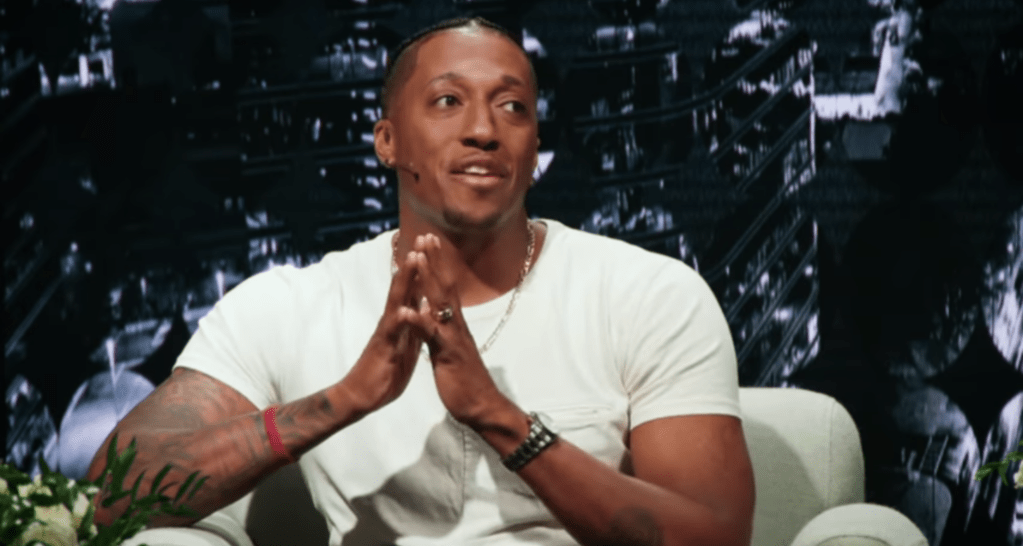
Lecrae challenged Giglio, Cathy, and the white members of the audience to submit themselves to the perspectives of black members of the faith community, instead of compromising and rebranding to protect white sensitivity and comfort.
Giglio, seems to express a desire to embrace the comfort, and the blissful blessing that comes from ignorance by aversion. It seems that a large portion of America sat gleefully under that stupor of ignorance for a long time. One can see why he would want to protect that safe space for himself and his own.
But it is also telling. He knows the power that knowledge and challenge have to galvanize. (To give grace here, in part that is why they are having this particular conversation in the context of other conversations.)
The stories and the perspectives that we inquire about from our past and present, greatly impact the way that we think and view the world, for better, or for worse.
There is one white American, that I’m pretty sure knew the significance of Juneteenth, and Greenwood. Dylann Roof.
The extensive “A Most American Terrorist: The Making of Dylann Roof” for GQ by Rachel Kaadzi Ghansah goes deep into the story of Roof and what urged him to target Mother Emmanuel.

He knew American history. He knew that African American history was American history.
He inquired and researched things not in textbooks. One excerpt shines some light:
The hatred animated him. The dots that connected all [his GPS data] were historical sites related to slavery and Confederate history, and practice runs to Mother Emanuel. He drove to the 400-year-old Angel Oak on Johns Island, the Museum & Library of Confederate History in Greenville, a graveyard of Confederate soldiers in his hometown, and plantations like Boone Hall in Mount Pleasant. And he spent one evening at the beach on Sullivan’s Island, a place that at one point was the largest disembarkation point in the United States for ships carrying enslaved Africans.
Rachel Kaadzi Ghansah – “A Most American Terrorist: The Making of Dylann Roof”
History past and present shaped Roof’s worldview. Demonic lies of identity that he internalized and came into agreement with led him to certain ideologies and actions in the present.
Horrifically, the brokenness of past and present met the brokenness in him and found haven.
When he was no longer ignorant, he was faced with a moment of crisis.

So many white Americans are going through the process of un-ignorance and are facing their crisis moments.
Many witnessed the killing of George Floyd. Many heard black friends or black pundits, or black celebrities or some non black folk talking about systemic racism and the racist past and present of this country, and had no idea what they were hearing.
But they saw George Floyd die, or they saw how some were reacting. And out of their ignorance, they chose inquiry over apathy.

Some of the best selling books on Amazon and according to the New York Times for the last few weeks have been mostly about the history of race in America. Eyes that would have turned away, are tuning in.
Voices that are not in line with white supremacy are being heard more and more.
The precipice is perilous.
Dylann Roof is an extreme example (hopefully the most extreme) but not everyone, when seeing our racist history and present, laments while longing for redress, healing and community.
In defense of the status quo, law enforcement and private citizens have enacted violence. Members of law enforcement may be abdicating over accountability. They seem to be expressing their longing for a more comfortable story.
But I think that we must continue to zoom out, to get a bigger picture of the whole.
Our spiritual enemy fears us. When Cain killed Abel, our enemy very likely rejoiced.

When Cain killed Abel he did not understand his identity, his brother’s identity, or God’s. He focused on a narrow part of the story, the part that was aligned to fear. The part that was easier to deal with. He focused too myopically on only his (own) story.
It led not to a blessed community but to disorder.
Community comes when the voices of the other are elevated and heard, when uncomfortable conversations are had, and people broken in broken systems are passed the mic.
June 20 & 21 were The Mass Poor People’s Assembly and Moral March on Washington.
The digital rally and movement elevates the voices of some of the 140 million poor and low-income people within the US.
The Poor People’s Campaign is the 21st century embodiment of the diverse coalition King was bringing together before he was assassinated.
There was fear of the potential of that community.
Some argue that the same was true after Bacon’s Rebellion in the late 1600s. “Inventing Black and White” from Facing History and Ourselves reads:
After Bacon’s Rebellion, Virginia’s lawmakers began to make legal distinctions between “white” and “black” inhabitants. By permanently enslaving Virginians of African descent and giving poor white indentured servants and farmers some new rights and status, they hoped to separate the two groups and make it less likely that they would unite again in rebellion.
Facing History and Ourselves
They say Crae you so divisive
Shouldn’t be a black church,
I said do the math
Segregation started that first
Lecrae – “Facts”
As we, an American community, engage in difficult conversations our eyes become opened. We begin to see the cracks in the foundation.

For some, willful ignorance or focusing on parts of the story that make us comfortable is tempting. But as the Apostle Paul says, “You have been set free from sin and have become slaves to righteousness.” (Romans 6:18).
And righteousness can be understood as right standing in relationship. And that right standing may mean listening to someone else’s story that has been pushed to the margin. Even if it makes you uncomfortable. Especially if your relationship is damaged because you have not listened.
Secular rapper and actor T.I. shared his reaction to the suggestion of White Blessing by Giglio, and Lecrae’s reaction to it in the moment.
T.I. commended Lecrae for the way he handled the situation. In very different words, he seemed to acknowledge the grace Lecrae gave in the moment.
Others were more critical. There seemed a sentiment that Lecrae had every right to react differently, to much more aggressively address Giglio’s words.
One could argue they are right.
Later, Giglio apologized. Lecrae put out an afterword as well. These times are messy. These conversations are messy. We need so much grace.
If we can do the work, and work through the messiness, then perhaps we the people of the United States can form a more perfect union based not just on his story or his story, but on our stories.
And as we work through the good and the bad and things get uncomfortable, we can lean on the Comforter sent to comfort us, in community.
What a blessing.
Thought it only fitting to feature Lecrae in the song selections this week, but I think Alert312’s “Everyone Eats” is appropriate for what the Poor People’s Campaign got up to.
If He came to set captives free,
And we’re called to be like our King,
Beloved why can’t we?
Beloved why can’t we?
Give a little?
Another uncomfortable conversation that needs to continue to be had is the marginalizing of the voices of women in the Civil Rights movement.
Leaders compromised and quieted where they shouldn’t have. In this they missed a mark. The impacts of those selective omissions I’d argue are still felt today.
We must acknowledge these things, learn from them, and create communities that are more fully beloved.
 Festival of Booths
Leave a comment