“When you write your own rules,
you could never lose
They say you a hero,
and they run the schools”
-Propaganda – Andrew Mandela
“But what’s a blessing
when it generates
a struggle of a color
For the privilege
of another?”
-Kings Kaleidoscope (feat Propaganda) – Playing with Fire
“[The black man] has no rights which the white man is bound to respect.”
-United States Supreme Court Chief Justice Roger B. Taney, March 1857
Dred Scott v Sanford
“When you write your own rules,
you can never lose
And the colonizers called you terrorist
and run the schools,
So it must be true”
-Propaganda -Andrew Mandela
The Laments in Midlothian circle around the question “will justice be done?”.
This question is asked because of the looming shadow of a legal system that has historically dehumanized one segment of the population while venerating another.
In the 1857 Dred Scott decision, US Supreme Court Chief Justice Robert Taney put it plainly. This PBS.org article sums it up:
“Referring to the language in the Declaration of Independence that includes the phrase, “all men are created equal,” Taney reasoned that “it is too clear for dispute, that the enslaved African race were not intended to be included, and formed no part of the people who framed and adopted this declaration. . . .” “
Africans in America PBS.org
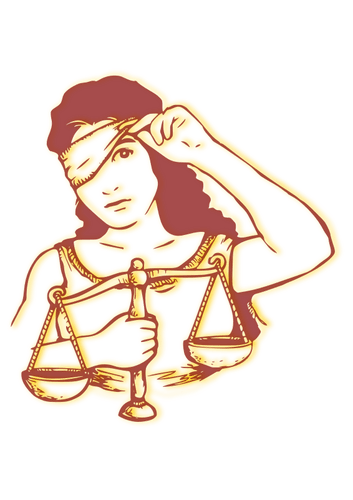
A leading voice of the majority opinion, of the highest court in the land pointed to the uneven scales, based on race, which were in the seeds and buddings of the nation. The diminishing and/or dismissing of the Imago Dei in peoples of African descent was a cornerstone of the country, its economics, and its legal system.
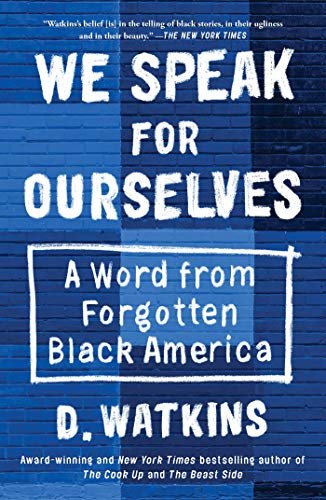
In his latest book We Speak For Ourselves, Baltimore’s D. Watkins references the veneration, or hero-level status that our society confers upon law enforcement, and the problem with that honorific being so cheaply given:
“Becoming a cop doesn’t instantly make you a hero. It means you met the basic qualifications as [listed], finished academy, and were granted a badge and a gun. We must stop calling all cops “heroes” as it is as dangerous as any other unfair stereotype assigned to any group of people. It’s also the reason why killer cops who murder unarmed African Americans are rarely charged and usually get to keep their jobs.”
–D. Watkins, from We Speak For Ourselves, Chapter 7 “An American Tradition” pgs 68-69.
The concept of race was crafted as a means to efficiently and effectively “other”, or distance and differentiate oneself from another, or one’s group from other groups. It was a tool the lowly lion was able to deploy and equip mankind with for the industry of condemnation.
The skin, the skin was an easy, and energy efficient way in.
One group of people was dehumanized, and another group was given the task of enforcing and executing that legal dehumanizing, the action of manifesting imagination. Faith begetting works. This latter group was also equipped with special privileges and protections to carry out the task. In the early days of the nation a badge was not needed. Possession of the burgeoning identity of Whiteness was enough.
This privilege was intimately tied to an economic system. Slavery and the economic boon it brought to America (and the Americas) could not have existed as long as it did without the intentional justification of the intentional devaluing of a group of people. (For historical analysis of this process in all of its absurdity and morbid, tragic comedy in the Americas see Gerald Horne’s The Counter Revolution of 1776, among other resources which follow.)
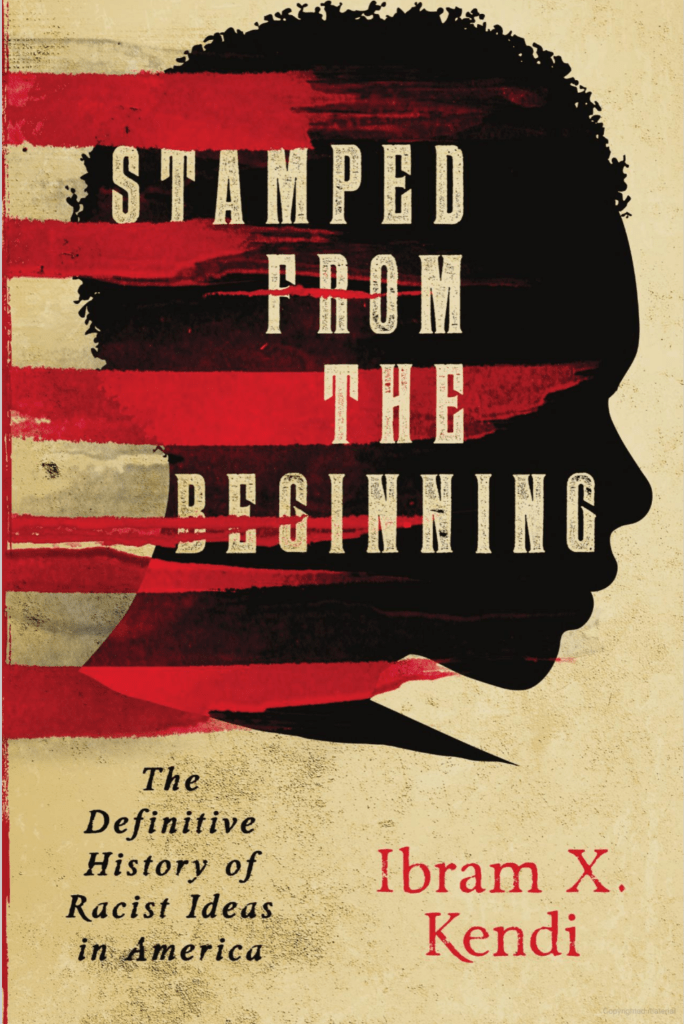
Just as racist laws in general have been historically used to enforce and validate handicapping one group to benefit another (as Ibram X. Kendhi discusses in depth in Stamped From the Beginning), special laws were later given to privilege law enforcement to make the most of the racism and otherism that was in the societal atmosphere.
Race and racism were not only created for– nor wielded sheerly for– the sake of interpersonal animosity.

It’s the economy idolatry stupid!
A social order was being created to predetermine winners and losers. And the law and lawmen became agents through the generations to maintain that order.
Retired LAPD Sergeant Cheryl Dorsey has provided commentary on instances of police brutality and misconduct on her Youtube channel Sergeant Dorsey Speaks. Drawing from years of experience as a former officer, Dorsey provides behind the shield insight. One thing she reminds her audience of frequently is the Police Officer’s Bill of Rights.
The specifics of these bills, whether Police Officer or Law Enforcement Officer may differ from state to state. Mike Riggs walks readers through a scenario of how one of these bills could impact an investigation of police misconduct in this 2012 Reason.com article “Why Firing a Bad Cop Is Damn Near Impossible”.
Illinois has its own bill for its officers. Ian Covey and his defense team have likely already, and may continue to call upon the reinforced protections this bill provides.
Some Officer’s Bill(s) of Rights have been amended in recent years, in part due to pressure, criticism, and scrutiny brought to their organizations by protests and unrests and uprisings. Besides those sudden moments of public pressure, long, steady, arduous work has been put in by advocates and civil rights lawyers for years and years without sensation. Organizations like Leaders of a Beautiful Struggle carry that banner.
The great disparities between the justice system for black citizens and law enforcement has been explored in great detail in recent years. Books like The Color of Law by Richard Rothstein, The Condemnation of Blackness by Khalil Gibran Muhammad, and When Affirmative Action Was White by Ira Katznelson, have shined light on the racializing process of law and on the racialized, discriminatory application of law in the United States of America.
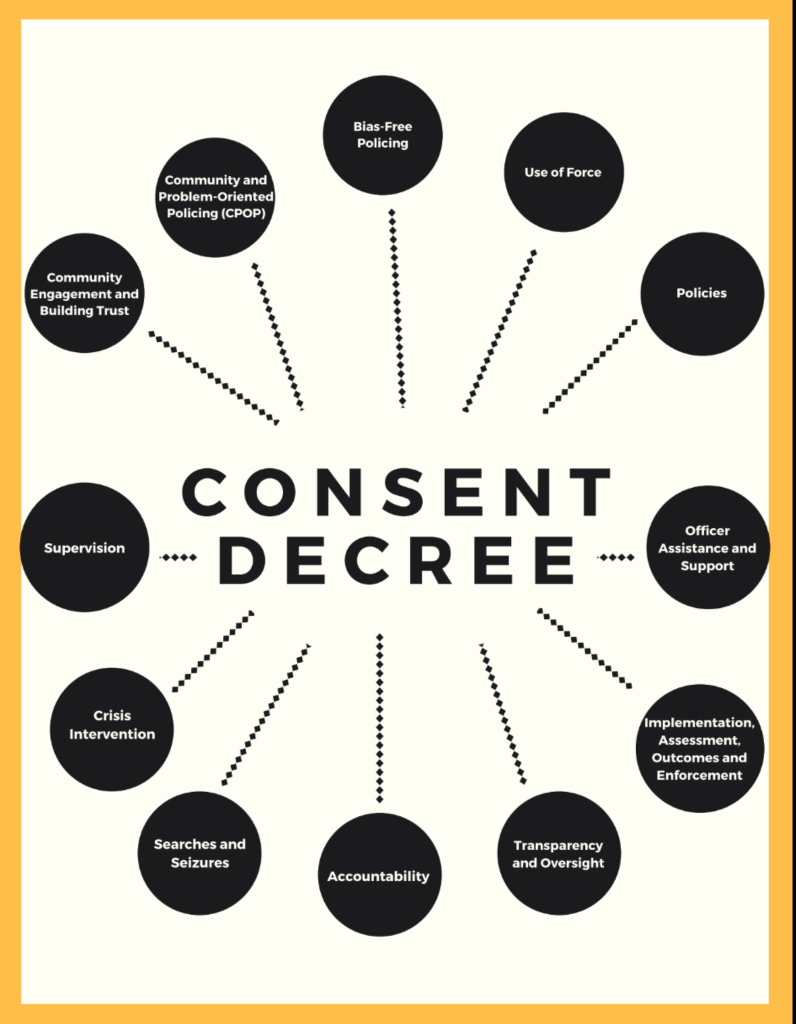
But there are voices that would dismiss this scholarship, and resist further scrutiny and accountability. The US Department of Justice was brought in to monitor the police departments of Ferguson, and Baltimore following unrests after the deaths of black citizens at the hands of law enforcement, and what many felt were inadequate consequences for those responsible for the deaths. The observed violations of citizens’ rights led to the establishment of consent decrees. Other cities with consent decrees include Cleveland, New Orleans, Chicago and Seattle (see page 24 for list).
Former Attorney General Jeff Sessions signed onto a memorandum calling to limit the use of this accountability measure. This is the same former Attorney General that quoted Romans 13 in his defense of policies that led to family separation. The former AG took a Biblical letter that was originally addressed to the young church of believers in Christ in Rome, for a specific purpose, and repurposed it for another. This passage of scripture has been used to sanction teachings antithetical to the teachings of Christ for generations. This sermon by Greg Boyd of Woodland Hills applies a sharp and direct critique to Sessions’ citation.
The sermon by John Kovacs of The Light, “A Righteous Reality: God and Government”, does wonders to put this passage back into a more appropriate context. The government and God as revealed through Christ will often be at odds in this fallen world. In large part this is because the authority that God gave to man, fell to the enemy in the fall. And when one of these things is not like the other, Christ-likes pledge their allegiance to the One True King, to the King of Kings only.
“… But before that I’m a child of the Kingdom
And that is my country, that is my country
We have a leader and none of your votes are persuading Him either
Give my taxes to Caeser but not my allegiance.
Who you more loyal to?”
– KB “Rebel Rebel 88”
In most of our superhero tales the heroes are not beholden to government or other oversight agencies (at least not for long), but that is because they hold themselves to a higher moral standard, not a lower one. They do not abuse their power. The villains do.
And yet, in our world, these abusers of power are protected.
Because they are serving something, but at times it is often not the people they are among. There are powers and authorities and principalities with an interest in putting bodies in jails and prisons. There are those that sit in positions of power and authority that have an interest in handing out tickets and fines and fees, disproportionately in poor and black communities.
Policing in certain areas has become a revenue generating machine.
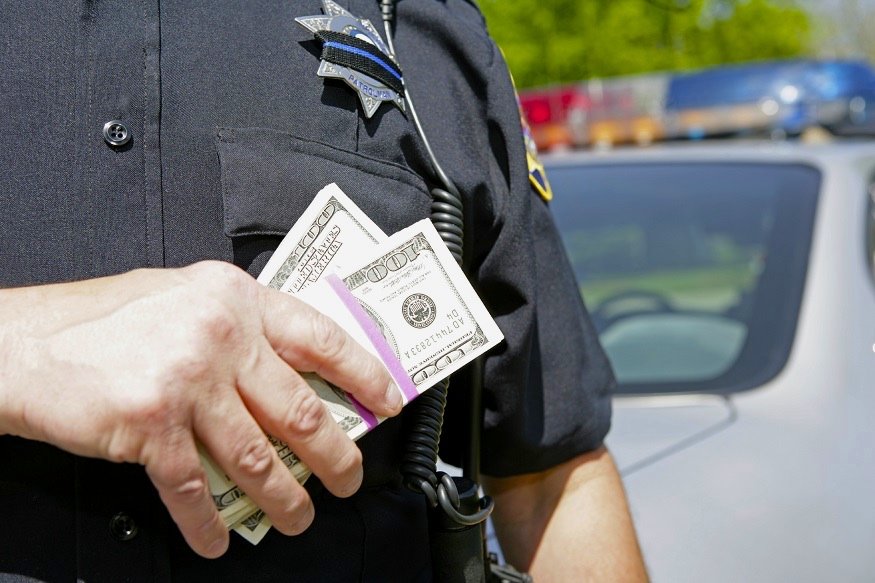
And so, because they are an economic boon, and a means of social control, they are given protection, decreased regulation, and more freedom. Greater power, less responsibility.
It is as if, in service to Mamon, they are free to make sacrifices.
If officers had to pay liability insurance, and each time they were found abusing power their premiums, and the premiums of everyone in their department increased, abuse would decrease.
If court settlements, sometimes in the millions, came out of officer pensions instead of taxpayer pockets, there would be less abuse.
The barrel, in which resides the few bad apples, would collectively expel the rot.
But the cry of “will justice be done?”, echoes on, because discriminatory laws that enable the police to abuse citizens endure. This broken system is in the blood of this nation. Those seeds continue to bear fruit.
There have been instances of justice, or something resembling it in recent years which gives some hope to the question. There are some cases where charges have been brought, some cases where they seemed adequate, but some instances seem woefully inadequate.
When/If Ian Covey goes to trial in the killing of Jemel Roberson, his defense will pull from that history of hero deference and protected status, and the condemnation of blackness. They may be able to call upon special privileges for law enforcement, while minimizing the rights of the victimized citizen.
They may present the jury (if there is a juried trial) with a framework of a value system, and implicitly, or explicitly say one life is worth more than another. This is an old tactic used by the lowly, roaring lion, to divide man from man.
The discriminatory laws we have were created to help enable the victimizing and plundering of one people group for the sake of another. Kleptocracy. Condemnation. This led to the Laments in Midlothian.
God’s heart has always been aligned differently.
The Lion of Judah has declared a different law, a law of love. Were this law observed, the laments would never come.
In the conclusion of this commentary, I will take a deeper look into this law of love, and the Lion that loves.
Songs: “Andrew Mandela” and “Crooked Ways” by Propaganda (and really the whole album “Crooked” please). Also “Precious Puritans”
“Playing with Fire” ft. Propaganda by Kings Kaleidoscope
“Black Market” by Derek Minor
“Rebel Rebel 88” by KB
 Festival of Booths